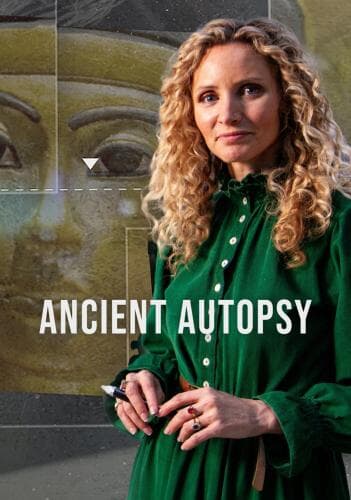
Next Episode of Ancient Autopsy is
unknown.
From Cleopatra to Genghis Khan, Professor Suzannah Lipscomb uses cutting-edge science and compelling detective work to reveal the truth behind the deaths of history's most famous figures.
Professor Suzannah Lipscomb deep dives into some of the greatest death mysteries of the ancient world, as she turns forensic detective and re-examines the final moments of four of ancient history's most iconic figures. Blending science, history, and compelling detective work, Suzannah is joined by world-renowned forensic pathologist, Dr Richard Shepherd, who deploys cutting-edge digital autopsy technology to reveal trauma, disease, and possible foul play. The pair begin by finding out if Egypt's last queen - Cleopatra - was truly killed by a snake. To get to the bottom of it, Suzannah confronts live Egyptian cobras, observes venom extraction, and explores academic theories of political murder. And with Dr Shepherd's forensic analysis and detailed examination of Roman records, they reconsider the truth behind one of ancient history's most famous deaths.
Professor Suzannah Lipscomb explores whether Alexander the Great died from poison, trauma or a deadly virus. She discovers surprising clues in a tiny Babylonian tablet and explores new virological theories with experts at the UK's Pandemic Institute. And through digital autopsy, Dr Richard Shepherd helps shed new light on the ancient world's most debated death.
Professor Suzannah Lipscomb turns forensic detective as she deep dives into the death and final moments of Genghis Khan.
Professor Suzannah Lipscomb investigates the mystery behind the untimely death of Tutankhamun. High-speed chariot tests and rare access to Howard Carter's original diary provide clues that reveal startling new possibilities. Meanwhile, Dr Richard Shepherd uses a digital autopsy to test the most debated theories surrounding the boy-king's demise.
Looks like something went completely wrong!
But don't worry - it can happen to the best of us,
- and it just happened to you.
Please try again later or contact us.