


Next Episode of Civics Made Easy is
unknown.
Civics Made Easy breaks down the complex world of American government and civic participation. Each episode transforms intricate concepts into clear, digestible lessons, equipping viewers with the essential knowledge to actively participate in their democracy. Designed to empower and inform, the series makes understanding civics both accessible and engaging for all.
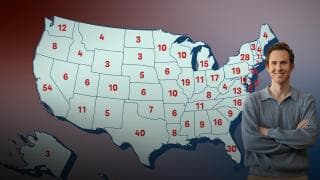
In this episode, Ben Sheehan provides a comprehensive exploration of the Electoral College, covering its historical origins, how it operates today, its controversies, and possible reforms.
In this episode, Ben Sheehan breaks down the origins of political fundraising and the ins and outs of campaign texts, political donations, Super PACs, and dark money.
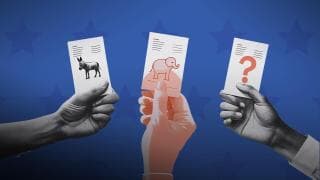
Ben Sheehan unpacks America's complex relationship with political parties, from George Washington's wariness to today's two-party dominance. Through a conversation with Independent Senator Angus King and an exploration of various state's voting systems, Ben explains how our current system evolved, why third parties struggle to compete, and what reforms could be made.
Ben Sheehan unravels the complexities of American elections, from the agricultural origins of Tuesday voting to the modern patchwork of state and county election systems. Ben breaks down who runs our elections, how they work, why Election Day is on a Tuesday in November and speaks with Commissioner Ben Hovland from the Election Assistance Commission.
Ben Sheehan traces the real history of voting rights in America. Who got the ability to cast a ballot, and when? How has voter eligibility changed over time? Why do rules differ so much from state to state? Along the way he uncovers a surprising truth: Americans don't actually have a constitutional right to vote for president.
Ben Sheehan explains the filibuster's history, evolution, rules, and potential reforms.
Why do we pay taxes? Where does all of that money actually go? And is the U.S. government collecting and spending our money wisely? Ben Sheehan takes a cold, hard look at America's finances. What is the history of taxing and spending? Who gets to decide how much money we owe? Why are some spending items in the budget ‘required' while others are merely optional? And how bad is U.S. debt really? Be
You probably learned about the original Constitutional Convention (the one from 1787) in history class. But did you know America could potentially be having another? Ben Sheehan explains what led to the original Constitution Convention, and whether or not another is on the horizon. How would a new constitutional convention work? Who makes the rules? And what are the potential benefits and risks?
How do we change the U.S. Constitution? We've done it 27 times – is that too many or too few? Ben Sheehan explains what constitutional amendments are. What are some of the most famous and consequential ones? Are there any parts of the Constitution that CAN'T be amended? And are there any new amendments that a vast majority of Americans could agree on in these polarized times?
You're probably aware of the Constitution and the Declaration of Independence. Maybe you know some of the documents' famous quotes. But what do they actually establish? What's the historical relevance and why do they still matter today? After all, they were written well over 200 years ago. Sheehan explains how one led to the other, and what we might fail to appreciate about their words.
Looks like something went completely wrong!
But don't worry - it can happen to the best of us,
- and it just happened to you.
Please try again later or contact us.