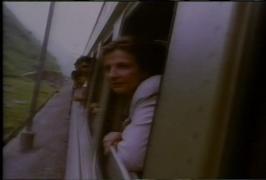
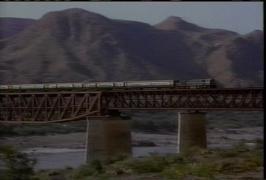

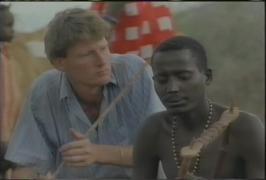
Next Episode of Great Railway Journeys is
not planed. TV Show was canceled.
Public figures travel the world by train.
Barrister-turned-TV host Clive Anderson is the first of six celebrities to indulge a passion for train travel in a new series of rail explorations.
From Hong Kong, Anderson sets out on his 2,500-mile epic with influenza, an eye infection and a Chinese phrase book. But as he gradually becomes accustomed to the train's cuisine - chicken's feet a speciality - he discovers a country in the throes of social and political change. The journey ends on the Trans-Siberian Express at Ulan Bator in Mongolia.
Journalist, author and anti-apartheid campaigner Rian Malan , in the second of this new six-part series, wrestles with his country's troubled past and increasingly uncertain future as he takes a journey spanning South Africa.
With its own police force and welfare service, South African Railways once represented the nerve centre of the apartheid state, but as a result of the political upheaval, the network is now crumbling.
On his trip, Malan visits the torched remains of Mahatma Gandhi 's commune on the outskirts of Durban, and Johannesburg, a city with the highest murder rate in the world. His journey is completed in the Lost City, a luxurious fantasy world in Bophuthatswana, where life remains sweet for the white man with money.
"I feel as if I have been on this train for ever," says Natalia Makarova , the former Kirov prima ballerina, as the Bolshoi Express begins to cross the steppes of Asia. "My mind is filled with buried memories one moment, fresh with new discoveries the next.
Makarova defected to the west in 1970 and now returns with her American-born teenage son to St Petersburg, the city of her birth and her greatest artistic triumphs. In the third programme of this six-part series in which famous people undertake memorable journeys, they board the luxury train on its two-week trip to the east.
She is saddened by Russia's wasted past and present-day decadence, while her tragic family history haunts her at
Volgograd's vast war memorial. But there are happier moments when she dances on the railway track, goes sturgeon fishing on the Volga and wanders among the blue domes and minarets of romantic Samarkand.
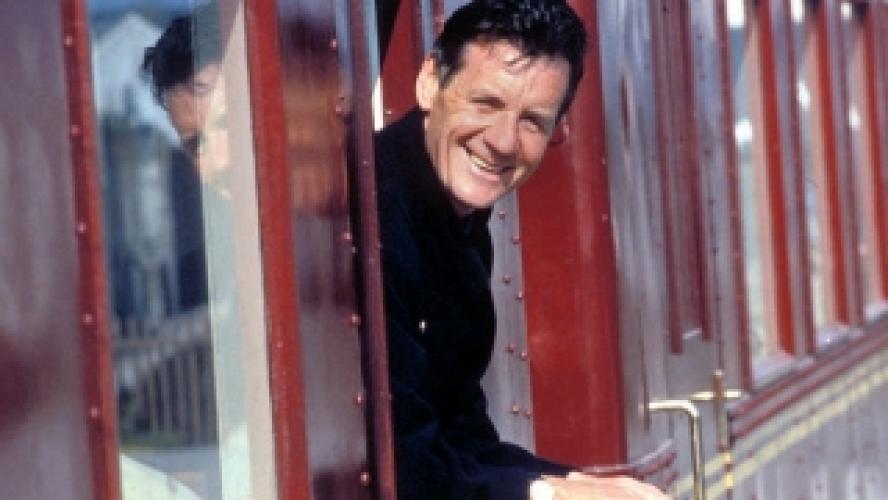
Michael Palin has travelled round the world In 80 days and then journeyed from North to South Pole - all in the cause of television journalism and entertainment. In contrast, a journey from Londonderry, in the north of Ireland, to Kerry in the south is a less frenetic trip. But it does fulfil Palin's love of travel.... and trains in particular.
"There is something about railways that makes life seem tantalisingly simple," he says. "it's a world In which choices are made for you, courses mapped out, paths already plotted, and the direction Is always forward."
On his journey Palin separates the myth from the reality about Irish rail travel, learns more about his Irish great-grandmother, and discovers that railways - and Ireland's train-spotters - are strictly non-sectarian. From Belfast he catches the "peace train", a service operated jointly by Northern Ireland Railways and Irish Rail, and travels to Dublin. Then it's Cork, the village of Buttevant, and a search for his roots.
Train travel is something special to poet-novelist Lisa St Aubin de Teran, even when things don't go absolutely according to plan. "I love the feeling of being inside the kaleidoscope that rail travel gives, of breaking down all the barriers, of flirting with life without having to make a lasting commitment," she says.
In the fifth of six programmes in which well known people undertake railway adventures, she begins her journey in the Brazilian coffee town of Santos and heads for the now infamous drug city of Santa Cruz in the foothills of the Bolivian Altiplano.
In the sticky heat of the tropical rainy season, a difficult expedition is made worse by unreliable timetables, rail strikes, late running trains and, in some cases, no trains at all. She sees the poverty and drug-induced violence of Sao Paulo, passes through a swamp larger than Britain, feeds hungry looking crocodiles and is serenaded by Brazilian singer Paulo Simoes.
For Mark Tully , the BBC's much respected correspondent on the Indian sub-continent, a 1,000-mile trip on the romantic Khyber Mail from Karachi to the Khyber Pass fulfilled a life's ambition.
Tully's travels bring to an end this series in which well known train lovers undertake memorable journeys. He discovers that in Pakistan, where railways are a legacy of the British Raj and remain the mainstay of the transport system, style is more important than speed. "In an Islamic country nothing is believed to happen without God's help," he says. "But Pakistani railwaymen know that even Allah cannot guarantee that their trains will run on time."
Tully takes a detour on a steam-hauled goods train, chugs through the Bolan Pass to Quetta, most Islamic of all Pakistan's cities, and catches the first train for 11 years to go through the Khyber Pass, closed since the Soviet-Afghan war.
Looks like something went completely wrong!
But don't worry - it can happen to the best of us,
- and it just happened to you.
Please try again later or contact us.