




Next Episode of Inside the Factory is
unknown.
Paddy McGuinness and Cherry Healey hit factory floors across Britain for a snoop around their supersized production lines. What are the secrets behind our supermarket staples?
Paddy McGuinness explores the secrets of the McCain factory near Scarborough to reveal how it cuts, fries and freezes 80 million chips a day. Today, he's following production of their best seller, the straight cut frozen Home Chips.
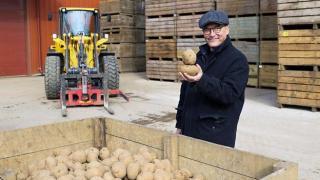
Of course, when it comes to making chips, the main ingredient is potatoes. And as Paddy steps out to the delivery yard, a lorry full of 28 tonnes of them has just arrived. Welcoming in one of up to 70 lorry loads that the factory receives a day is operations manager Mike Hartnett. He tells Paddy that on the back of the lorry is a special variety of potato called ‘Daisy', which is perfect for making chips. And on the back of one lorry are enough potatoes to make 1.7 million chips! Paddy can't quite get his head around the sheer numbers involved at this factory, and he's even more blown away when Mike tells him that it'll only take two hours to transform this load of spuds into frozen chips!
After passing a series of rigorous tests to check they have the correct starch content, the potatoes snake their way through the enormous factory on a series of conveyor belts. Half an hour into the process, Paddy is keen to find out more about Mike, asking him what condiment he prefers on his chips. To his horror, Mike tells him brown sauce! Wishing he hadn't asked, Paddy follows Mike and the spuds through a series of washers which remove stones and soil. Then it's on to the peeler, where Paddy leaves ‘Brown Sauce Mike' behind and meets production director Ashley Bowsley. To Paddy's amazement, Ashley tells him that they use an advanced steam peeling method which ‘explodes' the skin off the potato, minimising waste.
The next important production step is another hi-tech one. Instead of parboiling the potatoes to soften them, as you might do at home, they travel through a Pulsed Electric Field machine. Paddy learns that it sends electric pulses into the water that the spuds travel through, which softens them ready for cutting into chips. He states, ‘the amount of stuff what goes on with a humble chip in here is amazing.' And it doesn't end there, as the spuds travel through a cutting machine at 60 miles per hour, flying through a series of blades which transform them into chips. The result is spectacular, as Paddy sees 1.7 million chips cascade down a chip waterfall every hour. Just 67 minutes into the production process, he gets his hands on a chip.
The freshly-cut chips travel along huge conveyor belts from one hi-tech machine to another, and Paddy and Ashley are hot on their heels. The next process is another surprise: battering. Every chip is coated in a light batter, to create extra crispness after you've cooked them in the oven at home. Then, the chips are sent through a fryer, followed by a freezer and onto the vast packing hall, where Paddy's co-presenter Cherry is waiting for him. She's done a bit of genning up on the equipment and talks Paddy through the complicated process of weighing out the chips and putting them into one-kilogram bags.
Finally, the packed frozen chips snake their way towards the distribution area, where Ashley is waiting for Paddy and explains how an automated system loads 26 pallets onto the back of a waiting lorry. After just two hours, 1.7 million chips head out of the factory to be enjoyed with everything from sausages and beans to pies and pasties.
Elsewhere in the episode, Cherry delves into the science behind malt vinegar production and heads to a farm in the West Midlands which is busy harvesting potatoes for the chip factory, while historian Ruth Goodman tucks into the origins of everyone's favourite seaside dish, fish and chips.
Paddy McGuinness visits a medicine factory in Nottingham that's helping to tackle the nation's colds and flu, producing 230 million tablets and lozenges every single week.
Paddy McGuinness explores the Kellogg's factory in Wrexham to reveal how it makes 120 million boxes of breakfast cereal a year, inside a huge factory covering an area bigger than seven football pitches. In this episode, he's learning the secrets of how they make Special K.
Paddy McGuinness explores the secrets of Hayter lawnmowers at their factory in Hertfordshire, learning how they produce 15,000 mowers a year. They have been making the machines since the 1940s, so they certainly can cut it when it comes to mower construction. Paddy is following production of the Harrier 56 petrol-powered lawnmower.
Looks like something went completely wrong!
But don't worry - it can happen to the best of us,
- and it just happened to you.
Please try again later or contact us.