
Next Episode of Reactions is
unknown.
Reactions is a show that uncovers the chemistry all around us. We answer the burning questions you've always wanted to ask, blending the worlds of science and every-day life.
In 1998, a pharmaceutical company suddenly lost the ability to make their lifesaving HIV drug at one of its production facilities. Then that failure spread to the company's analysis labs. Then it spread to the other production facility, and within months the lifesaving drug had effectively vanished from the entire planet. And this wasn't the first time something like this had happened.
Alex went on a mission to find out once and for all what the research actually says and what the off-camera experts have to say about fluoride.
Chemists have been pulling carbon dioxide out of the air for almost 300 years, but can this seemingly magical technology save us from climate change? George answers that question with a couple of Erlenmeyer flasks, some limestone, two envelopes, and a straw.
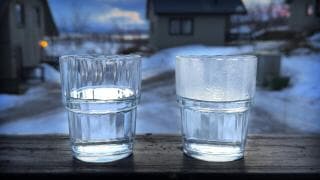
The Mpemba Effect happens when hot water freezes quicker than room temperature water, or does it? Alex goes on an exhaustive journey to replicate the Mpemba effect and hits a few snags on the way, including a paper being released the week this video was supposed to come out. Does this paper finally resolve all existing ambiguities about measuring relaxation speeds in the Mpemba Effect?
When seawater and freshwater mix, a surprising amount of energy is released. Norway tried to capture this energy using an osmotic power plant, but the plant mysteriously and abruptly shut down. Join George as he tries to figure out why using dialysis tubing, toilet parts, and a baby turbine.
In February 2025, a number of running world records were absolutely demolished by athletes who claimed they gained an edge through a common kitchen ingredient: baking soda. It sounds like pseudoscience, but incredibly, this trick might actually work… or make you violently ill. So of course, Alex had to try it.
If you rub two identical balloons together, they both pick up a static charge. This strange and unexpected behavior has been documented in the scientific literature and remains fundamentally unexplained to this day. But when George tries the experiment, he stumbles into something that – to the best of his knowledge – has never been reported in the literature, and is, if possible, even stranger.
There's been an increase of manufacturers cutting honey with corn syrup or cane sugar. This week Alex takes to the lab and investigates the stable isotopes in 20 different honeys to see if they contain pure honey or have been adulterated.
Looks like something went completely wrong!
But don't worry - it can happen to the best of us,
- and it just happened to you.
Please try again later or contact us.