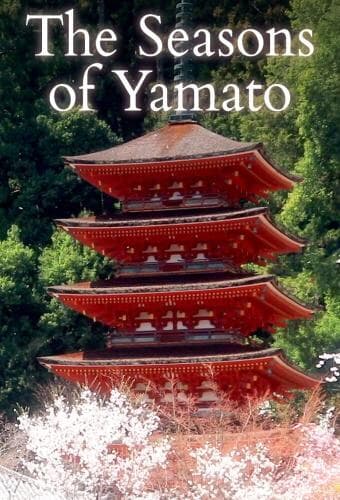
Next Episode of The Seasons of Yamato is
unknown.
Here is the high-resolution movie by Koichi Hozan, a videographer living in Nara Prefecture, with exclusive pieces which a pianist, Mine Kawakami, played on the "Hyakunen (100-year-old) Piano." The light and sound create a poetic video to make you experience each season. Cast (Piano): Mine Kawakami "Yamato-no-Kisetsu," composed by Mine Kawakami
Nara no Yaezakura (Double cherry-blossoms)," Nara Prefectural flower. Chisoku-in Temple, the precincts of Todaiji Temple (Nara City). [Chisoku-in Nara no Yaezakura, National Natural Monument]
Double cherry-blossoms with white petals and a faint tinge of red are blooming in the rain, which glistens with the fresh greenery. Nara no Yaezakura is said to be the last cherry blossom to bloom. They are very delicate and delightful amidst the bright greenery.
*According to the 24 Solar Terms of Reiwa 6 (2024), Kokuu is from April 19 to May 5.
"Hatenashi" is a small village along the pilgrimage route of the World Heritage Site "Kumano Kodo." As the name suggests, it is Tenku no Sato "The Village in the Sky, " surrounded by mountains that stretch as far as the eye can see. Rice seedlings were planted in the flooded fields. Rainwater falling from the sky curls, splashes and dances on the surface of the rice fields. Eventually, mist rises from the green mountainside, and the rain that falls on the ground returns to the sky.
*According to the 24 Solar Terms of Reiwa 6 (2024), Rikka is from May 5 to May 20.
A calm afternoon as summer approaches. Kakitsubata (Rabbit-ear Iris) flowers are blooming brightly along the water's edge. It is said that in the 5th century, "Iwanohime," the Empress of the Emperor, was buried here in "Hishage Ancient Tomb." A quiet time that has continued since ancient times passes, and a gentle breeze sways the water surface. The dragonfly is a messenger that transcends time. Before you know it, the area is enveloped in the light of sunset, and a crescent moon appears in the sky.
*According to the 24 Solar Terms of Reiwa 6 (2024), Shouman is from May 20 to June.
The sounds of frogs and birds chirping can be heard in the rice fields that have just been planted. A refreshing breeze blows, creating beautiful ripples on the water surface. A view that makes you feel the arrival of something invisible to the naked eye. Eventually, the light reflected on the water surface changes, and the color of the dusk sky will reflect on the water surface.
*According to the 24 Solar Terms of Reiwa 6 (2024), Boushu is from June 5 to 21.
Around the summer solstice, Japan enters the rainy season called "Tsuyu." Flowers of "Koajisai" (Hydrangea hirta), which often bloom in bright forests or near water, are ephemeral yet delicate. They give off a sweet, refreshing fragrance, which makes them even more appealing. A colony of hydrangea hirtas that you come across in Higashiyoshino Village, located in the central part of Nara Prefecture.
*According to the 24 Solar Terms of Reiwa 6 (2024), Geshi is from June 21 to July 6.
As thunder echoes through the forest and the rain gets heavier, "Golden-Rayed Lily" blooms quietly. Soon the sky clears and summer-like clouds appear. The silhouettes of the Yamato mountains stand out in the evening light. The real heat will soon be upon us.
*According to the 24 Solar Terms of Reiwa 6 (2024), Shousho is from July 6 to 22.
A view of the Pagoda of Yakushiji Temple across the Oike Pond, and Mount Wakakusa in the distance. Summer clouds are rising one after another in the blue sky. At Mount Wakakusa, deer have gathered at the peak and are grazing beneath the summer clouds. A sweltering summer has arrived in the Yamato Basin. As dusk falls, the sounds of cicadas' echo, bringing a moment of coolness.
*According to the 24 Solar Terms of Reiwa 6 (2024), Taisho is from July 22 to August 7.
Natsu-zuisen (Lycoris squamigera) sway gently in the breeze. The sound of distant thunder amid the chirps of cicadas is a sign that rain is coming. Amid the summer greenery, the rain-soaked Natsu-zuisen shine with a pale, ephemeral color. Can you sense the approaching signs of autumn in the heat?
In Asuka Village.
*According to the 24 Solar Terms of Reiwa 6 (2024), Risshuu is from August 7 to 22.
Before dawn, the sounds of autumn insects echo through the rice terraces of Hatenashi, Tenku no Sato "The Village in the Sky". Morning dew glistens on the tips of the rice leaves. The color of the sky changes moment by moment, and the morning sun makes its appearance. Morning dew clings to the drooping ears of rice, announcing the arrival of autumn.
*According to the 24 Solar Terms of Reiwa 6 (2024), Shosho is from August 22 to September 7.
Just before dawn. It is the magic hour when the sky changes color moment by moment. The edges of the clouds sparkle, revealing the clear, golden sunlight. Autumn, White Dew (Hakuro). Morning arrives with the land of Yamato covered in a sea of white clouds.
*According to the 24 Solar Terms of Reiwa 6 (2024), Hakuro is from September 7 to 22.
In the autumn rain, the bright red color of the red spider lilies, "Higanbana," are displayed on both sides of the dimly lit stone steps. The "Higan" in "Higanbana" is a Buddhist word meaning the other side beyond delusion. In Japan, it is customary to visit graves during the "Ohigan" period when red spider lilies bloom. The national holiday "Shuubun no Hi (Autumn Equinox Day)" is said to be a time to honor ancestors and remember those who have passed away.
*According to the 24 Solar Terms of Reiwa 6 (2024), Shuubun is from September 22 to October 8.
After the rain, a vivid rainbow spans the Heijo Palace Site. A scroll of light unfolds between the sky and the horizon. The colors of the autumn sky gradually deepen, and soon the moon appears. The clouds and sky are dyed crimson red. The magic hour arrives, bringing a sense of nostalgia to your heart.
*According to the 24 Solar Terms of Reiwa 6 (2024), Kanro is from October 8.
The cosmos flowers are swaying in the autumn rain. This is the site of Fujiwara Palace Ruins, where the royal palace was located from 694 to 710 AD. Can you see an "ancient scene" in the drops of water?
*According to the 24 Solar Terms of Reiwa 6 (2024), Soukou is from October 23 to November 7.
Sakahara-cho, Nara City. On the mountain side east of the city center, the chill is felt a little early. The cosmos flowers are drenched in rain and droop their petals. Autumn is about to pass by swiftly.
*According to the 24 Solar Terms of Reiwa 6 (2024), Rittou is from November 7 to 22.
As autumn deepens and winter approaches, we visit the Kasugayama Primeval Forest. Colorful autumn maple leaves float on the water's surface.
Falling leaves and clear light. Stone Buddhas make you feel the quiet flow of time.
*According to the 24 Solar Terms of Reiwa 6 (2024), Shousetsu is from November 22 to December 7.
Just before dawn, mist rises from the water's surface in the chilly air. This is the pond behind Todaiji Temple's Great Buddha Hall. The fallen autumn maple leaves, edged with white frost, look like works of art. As the sunlight reaches the pond, the frost disappears like an illusion. It's as if a spell has been broken.
*According to the 24 Solar Terms of Reiwa 6 (2024), Taisetsu is from December 7 to 21.
It's the winter solstice, the shortest day of the year. The rice terraces of the Asuka Village are surrounded by trees that still have their autumn colors. Fallen leaves float along in the Asuka River. The end of the year is just around the corner, and a new year is on its way.
*According to the 24 Solar Terms of Reiwa 6 and 7 (2024-25), Touji is from December 21, 2024, to January 5, 2025.
With the new year upon us, the clear light sparkles on the water's surface. The "Mizukami Pond" on the bank of the ancient tomb is a relaxing waterside spot where migratory birds gather. It's still cold, but the light is causing the daffodils to begin to bloom.
*According to the 24 Solar Terms of Reiwa 7(2025), Shoukan is from January 5 to 20.
The Ryusen-ji Temple in Tenkawa Village is known for its mountain ascetic practices. The pond, where ascetics purify themselves, is silent and still amidst the snow. Amid the monotone scenery, colorful streamers sway in the wind. It is the coldest season of the year. What "whispers" will you hear from the water that has turned into snow?
*According to the 24 Solar Terms of Reiwa 7 (2025), Daikan is from January 20 to February 5.
Amid flurries of falling snow, yellow wintersweet flowers are blooming. The view overlooking the three mountains of Yamato still has a prevailing winter atmosphere. Light is shining down to the earth from between the clouds in the sky. Perhaps the light of spring has begun to fill the air above the snowy clouds? A message of light quietly announces the start of spring in Yamato.
*According to the 24 Solar Terms of Reiwa 7 (2025), Risshun is from February 3 to 18.
Stone Buddha statues stand quietly in the garden of Hashimoto-in Temple. Amid the falling snow, spring flowers are beginning to bloom. Brilliant crimson camellias and adorable pale pink flowers look like cherry blossoms. Even in the cold, you can quietly feel the approach of spring.
*According to the 24 Solar Terms of Reiwa 7 (2025), Usui is from February 18 to March 5.
Shrine maiden's ceremonial dance at Kasugataisha Shrine. The double-flowered plum trees are deepening in crimson. The moss glows green as it absorbs water, and the spring breeze is blowing. As the days grow longer, the murmuring of the water heralds the arrival of spring.
*According to the 24 Solar Terms of Reiwa 7 (2025), Keichitsu is from March 5 to 20.
The surface of the Yoshino River sparkles, rippling as the wind blows across it. In the distance, a train can be seen slowly crossing the iron bridge. The evening light gradually takes on a reddish hue, and the sparkle on the water's surface deepens. The silhouette of the train passing by on the bridge stands out in the setting sun. I wonder what kind of people are on board that train... A fantastical, once-in-a-lifetime sight that seems likely to take you far away.
*According to the 24 Solar Terms of Reiwa 7 (2025), Shunbun is from March 20 to April 4.
Mount Yoshino, which was frequently visited by emperors in ancient times, is known as a famous cherry blossom spot. The cherry trees in Yoshino are mainly "mountain cherry trees," and each one has a different color and blooms at a different time, boasting its own individuality. Pale pink, white, red, and the green of the cherry leaves... The morning mist brings moisture, and in the sunlight, Mount Yoshino is now beginning to shine in a variety of colors. A symphony is being played to celebrate the brilliance of life... for all living things.
*According to the 24 Solar Terms of Reiwa 7 (2025), Seimei is from April 4 to 20.
Looks like something went completely wrong!
But don't worry - it can happen to the best of us,
- and it just happened to you.
Please try again later or contact us.