Next Episode of Untold Earth is
unknown.
Untold Earth is a documentary series dedicated to unpacking the stories behind North America's strangest, most unique natural wonders.
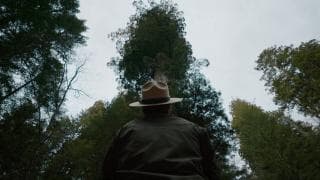
Pando, Latin for 'I spread,' appears to be a forest but is actually one massive tree. Weighing 13 million pounds, Pando is the world's largest living organism. It has thrived in Utah's Fishlake National Forest, spreading across 106 acres with 47,000 stems. Find out how human intervention has both threatened its survival and sparked a passionate mission to protect it.
The Atchafalaya River Basin is the United States' largest river swamp and Louisiana's first line of defense against the extreme weather that threatens the Gulf Coast. How does this swamp and its Cypress trees protect us from extreme weather? And how can we protect them?
Locked within the stones and fossils of Petrified Forest National Park lies a record of life, death, and resilience during one of Earth's most extreme periods of environmental change. What secrets do these fossilized ecosystems reveal about the prehistoric past, and how can they help predict the future of life on Earth?
The awe-inspiring visuals of the aurora borealis have fascinated humanity for centuries, but its most enduring mystery lies not in what we see but what some have claimed to hear for generations. Although such accounts have long been dismissed by modern science, could it be that these stories were right all along?
In Florida's wetlands, the carnivorous pitcher plant is blurring the lines between predator and ally. Home to entire unique ecosystems, there are more to these ancient organisms than many realize. So why do these beautiful and vicious plants have mercy on some and not others?
Every winter, off the coast of South Australia, thousands of giant cuttlefish gather for the showdown of a lifetime. In an effort to win a mate, these shape-shifting sea creatures display some of the most bizarre and brilliant tactics in the animal kingdom. The unique habitat attracts thousands of cuttlefish each year, making it the largest aggregation of the species in the world.
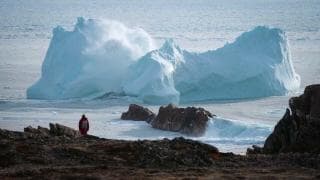
Where typical ocean tides average about three feet, the Bay of Fundy's record-setting tides soar over 50. This means 160 billion tons of water rush through the bay twice every day, generating enough potential energy to power a small city. This singular phenomenon could revolutionize our approach to renewable energy, but harnessing the Bay of Fundy's tidal power is also extremely complicated.
The shimmering dunes of White Sands National Park harbor an extraordinary secret: fossilized human footprints that suggest human presence in the Americas as much as 10,000 years earlier than previously believed. How did these footprints in the sand manage to survive for so long? And why is their discovery changing everything we thought we knew about human history in the region?
With under 40 pupfish left in the wild, these are possibly the rarest fish on the planet. The Devils Hole pupfish have existed in isolation for thousands of years in an extreme environment where few species could survive. How did they end up in such an inhospitable place? And what makes their survival so important?
Lençóis Maranhenses sits at the intersection of three biomes—a rare overlap that supercharges biodiversity. Across 350 square miles of dunes, the rainy season brings thousands of crystal blue lagoons into view, many big enough to swim in. What makes this surreal environment possible? And why, even after 2 million years in existence, does it still feel so mysterious?
Looks like something went completely wrong!
But don't worry - it can happen to the best of us,
- and it just happened to you.
Please try again later or contact us.